


Gratitude Friday 12 12 2025 Our American Cincinnatus and Establishment of National Norms

As a side note, last Friday was the five-year anniversary of this blog. I have written 261 weekly gratitude blogs. This is roughly equal to 130,000 words. I have more in me but perhaps not weekly. Thinking that at the end of the calendar year, I may break from weekly writing on gratitude and revisit from time to time
One of the things I have done with this page is to find history that resonates with me and reflect on it. I have learned a lot in that way. In preparing this post, I saw that on last week in 1792, George Washington was elected to his second term as our first President. He has been termed our American Cincinnatus. It is a nickname referencing his selflessness and commitment to republican ideals, mirroring the Roman statesman Cincinnatus. Like Cincinnatus, Washington voluntarily relinquished power for the good of his country, even when he could have held onto it. He served his first term after he led us to military victory in the war of our Revolution. We cast off the chains of being subservient to the crown of the world’s superpower and instead opted to self-govern. It was a radical concept and an incredible win. We did not do it alone. The primary foe of England was France, and they helped us a great deal. Washington, as our military leader made a lot of mistakes and often got lucky, although some of his strategies were brilliant.
If you read the history of this era, at times he was seen as a failure to be replaced, but he ended the war as our national hero. There were no political parties, and he was unanimously elected by the Electoral College in both the 1788-1789 election to be our leader. He was reluctant to serve again, but he did. I also have read enough history to know that he was a flawed human as every single one of us is. We can put him in the trash bin of history because he did not live up to our standards or we can hold him up for what he did in his finest hours. I chose the latter rather than the former.
There are things that are predictable about human nature. One of them is that power gained is almost never voluntarily ceded. He would have likely been elected to a third term and beyond. Our lifelong leader as he consolidated power. That is the norm of human history. He did not chose this course. George Washington left office on March 4, 1797, after choosing not to seek a third term as president. He set a precedent for the peaceful transfer of power and to prevent the presidency from becoming a lifetime role. In this way, he established the most important norm of our young nation.
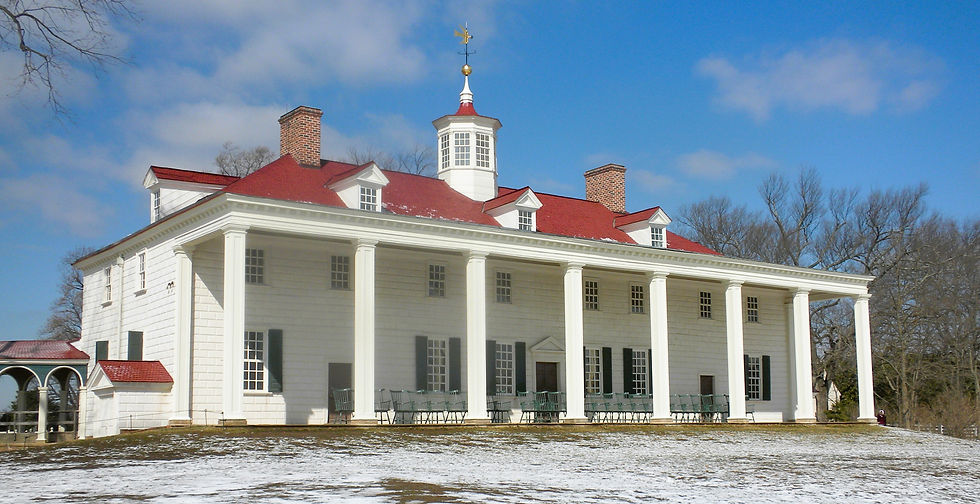
While I am a reader of history, I have not concentrated on Washington. I have read a number of period books that describe the formation of our nation and visited his home at Mount Vernon. He was deeply respected. In the early 19th century, almost 40% of families in the Chesapeake region named a son after him. George was the most popular name of the era. Many freedmen after the Civil War also adopted the name. It remains a popular name even now.
His Farewell Address in 1796 is considered one of the most important, if not the most important speeches in American History. The ideas are his, but it was mostly written by Alexander Hamilton with help from James Madison, names that should be familiar to most Americans. A great place to learn about this speech is the National Constitution Center that has a reading of the speech available for visitors. The original is at the New York Public Library and can be viewed here in Washington’s own hand. His hopes and concerns for our future remain quite relevant.
One of my favorite sections of that speech:
“It is important, likewise, that the habits of thinking in a free country should inspire caution in those entrusted with its administration, to confine themselves within their respective constitutional spheres, avoiding in the exercise of the powers of one department to encroach upon another. The spirit of encroachment tends to consolidate the powers of all the departments in one and thus to create, whatever the form of government, a real despotism. A just estimate of that love of power and proneness to abuse it which predominates in the human heart is sufficient to satisfy us of the truth of this position. The necessity of reciprocal checks in the exercise of political power, by dividing and distributing it into different depositories and constituting each the guardian of the public weal against invasions by the others, has been evinced by experiments ancient and modern, some of them in our country and under our own eyes. To preserve them must be as necessary as to institute them.”
In reflecting on our fledgling nation, 233 years ago in Congress Hall in Philadelphia Pennsylvania, he received all 132 electoral votes from the 15 participating states and began to set the stage for the peaceful transfer of power that has been our norm since then. He did the one thing that so few in human history have been able to do. He walked away from power to serve a greater good. That is one of his most important contributions to our nation.
The beauty of the written word is we can look back at what he wrote and understand it. He walked the talk of representative government. He set that standard for all of us. Through his actions to live up to his higher ideals, he challenged us to do the same. I am grateful for his example. I hope we live up to it.
What are you grateful for today?





Comments